Information
Why Regenerative Farming?
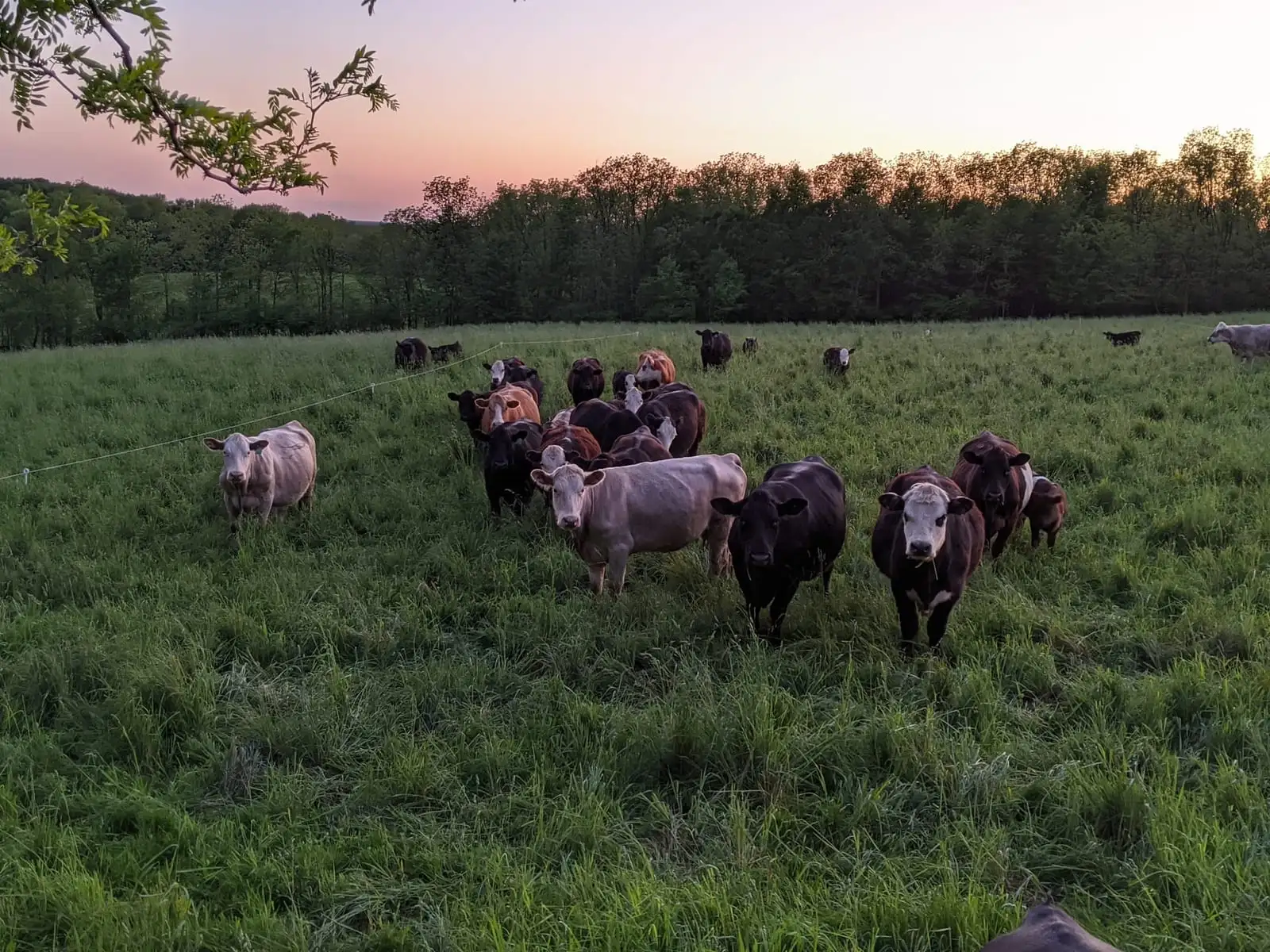
The goal of regenerative farming is to rebuild the soil and the life within it. We do that through rotational grazing.
We move the herd to a new paddock every day, which gives the previous day’s paddock time to regrow. Grazing stresses and stimulates the grasses, and that in turn stimulates the soil and the microorganisms in it. That kind of stress is good. It activates the plants and they grow back hardier. As a plant regrows, it pulls more carbon from the air. It trades some of that carbon to microorganisms and mycorrhizal fungi in exchange for nutrients.
Over time, this approach reduces topsoil loss, keeps more carbon in the ground, increases the diversity of life in the soil (bacteria, fungi, and worms), and keeps nutrient and water cycles working.
As a rotationally grazed herd moves from paddock to paddock, it eats about 40% of the grass. The rest gets trampled into a layer of mulch. That mulch feeds the microorganisms in the soil, covers the ground, helps it hold water, and helps prevent erosion.
Whatever your convictions, whether you credit Mother Nature or the hand of God, there is a good plan in place if we work with it instead of trying to improve on it or fix it. Being sustainable isn’t enough. If you’re not working the way nature intended, you aren’t really sustainable.
Regenerative farming is how we work with that plan.